
Story
Felder's Garden Lights
Winter Darkness Time took over my late afternoon outdoors enjoyment before I was ready. Making the garden glow after dark goes beyond attractive and enjoyable; it's also a safety issue. "Watch your step!" has little...
Winter Darkness Time took over my late afternoon outdoors enjoyment before I was ready. Making the garden glow after dark goes beyond attractive and enjoyable; it's also a safety issue. "Watch your step!" has little meaning when folks can't see their feet in the first place.
To lure me and occasional guests outside all year, my little private Eden doubles as both daytime interest and after-hours moon garden. But it's no fun traipsing around in the gloom, which is why I was out last week adjusting night lighting to banish some of the dark.
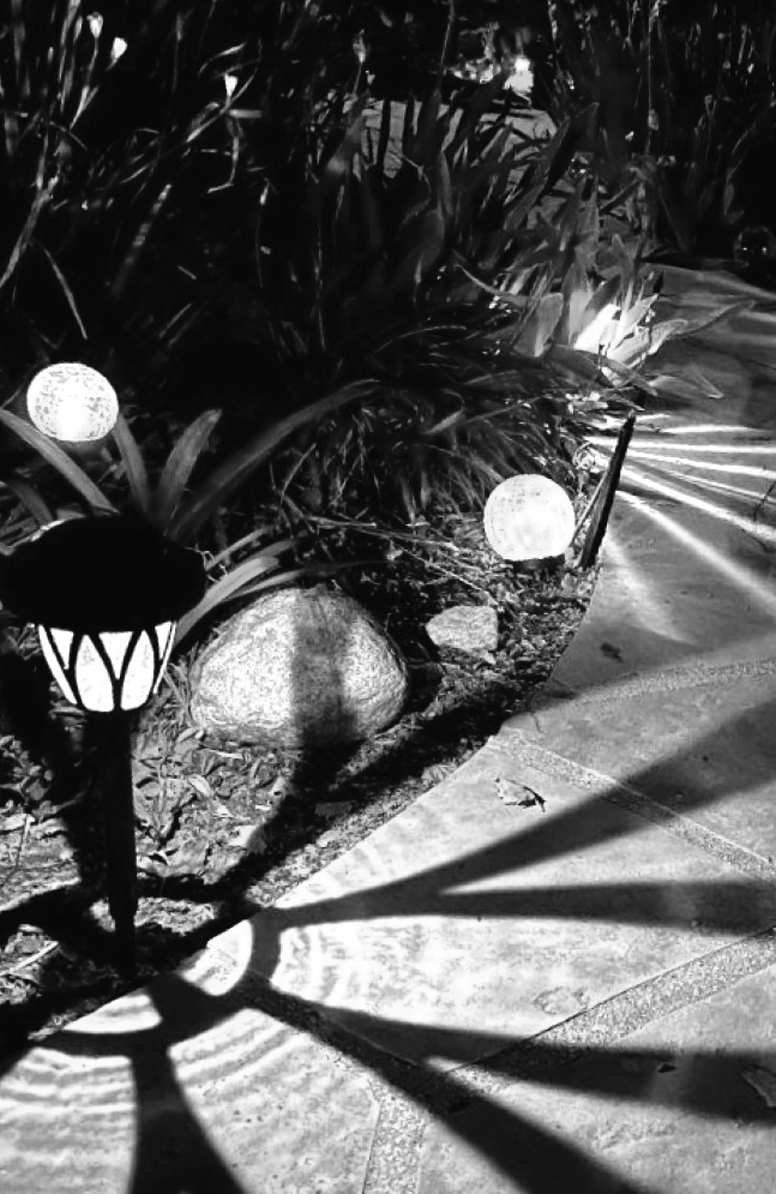
But it isn't all about flooding the garden with electric lights, though I have carefully sited a few easy-to-install low-voltage fixtures. I scattered a few path lights here and there but only where needed and beside steps that are a little tricky in the dark; soft, indirect "wash" lights are hidden along walls to backlight trees, and I highlighted two garden features. Plus, I have strands of small, all-year "fairy lights" wrapped around the trunks of a yaupon holly tree and the entry arbor to my back garden.
I don't use solar lights because my back garden is a tad too shaded for them to get charged during mostly-overcast winter days; instead, I invested in a low-voltage transformer with a day/night timer, a roll of all-weather electric cable hidden under mulch, and just enough light fixtures clipped on here and there to do the job without making the garden look like an airport runway. The newer LED lights are very inexpensive and long-lasting, and just as bright. It was inexpensive, easy to install; plug it in and I'm done, with just an occasional add-on or adjustment.
Early on, keeping in mind that shadows are as effective as lit spaces, to reduce glare I was careful to walk around as if I had never been in the garden before, to notice if any lights shine directly in my eyes, then redirect them as needed.
Other more subtle garden-brightening techniques work well, too, like having pale flagstone walks that are pressure-washed every fall to keep them bright, and a few carefully placed hard features which reflect even the tiniest bit of ambient light. My most effective are silvery gazing globes, a pile of oyster-white conch shells, an antique bird bath, two low, wide water features set near paths, and a couple of strategic mirrors.
I even lined a walkway flower bed with a row of glittery glass bottles stuck neck-down - granted not everyone's cup of tea, but neither are my Dale Chuly-esque lit-up bottle trees that glow in the dark even when covered with snow. One of my favs is all-clear bottles, that isn't such an eye-poke in the daytime but really shines at night.
I also plant specifically for winter darkness with strategically located clumps of variegated Liriope, dwarf variegated Color Guard yucca, and oyster-white pottery filled with cold-hardy almost glow-in-the-dark flowers including dusty miller and light-colored pansies, violas, and snapdragons. On even a partially moonlit night they shine like gems.
These little add-ons make it easy and safe to stroll through my garden creation at night, with or without a touch of pale moonlight, meaning twilight time in the garden doesn't have to be gloomy or dangerous.
Anyway, though actual dark time now starts before mental afternoon has ended, hectic lives and weary minds still need a place to settle down a few moments away from TV and dinner dishes. And a cool fall or occasional pleasant winter evening in a garden without mosquitoes, the only light a small flickering fire on the patio, is all about relaxation.